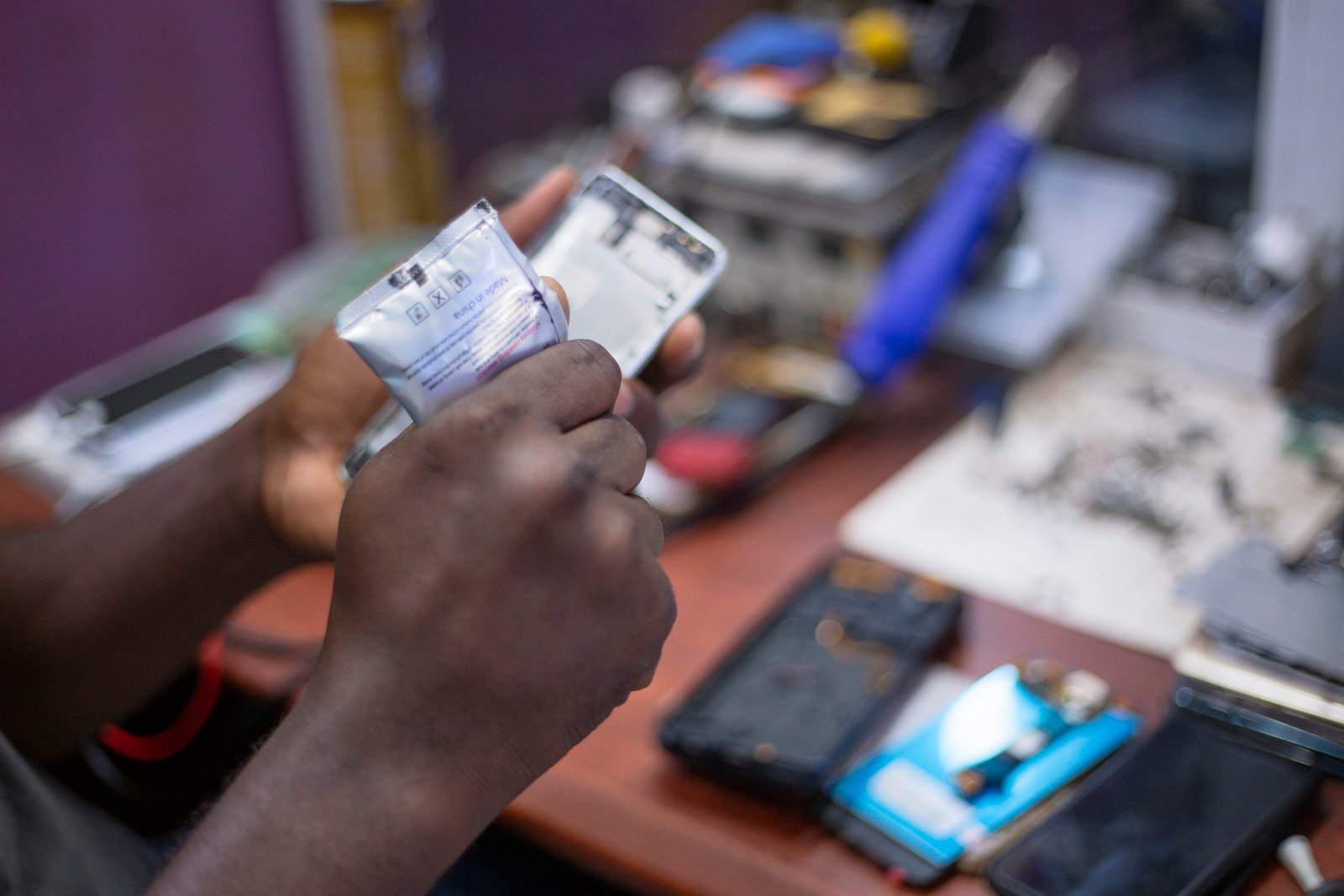
Buying a phone, laptop, tablet, or smart device is only the first cost. The longer-term cost depends on whether the battery can be replaced, spare parts remain available, repairs are documented, and software allows replacement components to work correctly.

Repairability has become a larger part of technology buying decisions as governments, manufacturers, independent repair shops, and consumers debate right-to-repair rules. This guide explains what repairability actually means, how software locks and parts pairing affect repairs, and what buyers can check before choosing a device.
Repairability is more than opening the case
A device can be easy to open and still difficult to repair if replacement parts are unavailable or software refuses to recognize them.
A truly repairable product needs physical access, parts, tools, instructions, diagnostics, and software support.
Think about the whole repair chain
The question is not only “Can a technician reach the battery?” It is also “Can the technician buy a correct battery and make the device accept it?”
Batteries are the most common long-term wear item
Lithium-ion batteries lose capacity with age and use.
A device that still performs well can feel unusable when battery life becomes too short.
Replaceable batteries extend useful life
A battery replacement can keep a phone or laptop useful for several more years.
Battery replacement difficulty varies
Some laptops use screws and accessible connectors. Others use heavy adhesive.
Phones often require careful heating, display removal, adhesive replacement, and waterproof-seal restoration.
DIY difficulty is not the same as professional repairability
A product can be difficult for a beginner but still reasonably serviceable by trained technicians.
Replacement part availability
Repair depends on having the correct part.
Check whether the manufacturer sells genuine batteries, screens, keyboards, cameras, fans, charging ports, or other common components.
Availability over time matters
A part sold during the launch year is less useful if it disappears after two years.
Official repair programs
Some manufacturers provide self-service repair stores, manuals, tool rentals, or authorized repair networks.
Apple Self Service Repair and manufacturer programs from other companies show how official repair access is expanding.
Official does not always mean economical
Compare part cost, tool cost, time, and professional repair price.
Independent repair shops
Independent technicians can offer lower cost, faster turnaround, and repairs not offered through official channels.
Quality varies widely.
Choose shops by process, not only price
Ask about part quality, warranty, data handling, water-resistance restoration, and diagnostic methods.
Repair manuals matter
A detailed service manual reduces guesswork.
It should show disassembly order, screw locations, cable handling, adhesive steps, torque values where relevant, and reassembly checks.
Video tutorials are useful but not a replacement for official data
A creator may use a different device revision or skip safety warnings.
Diagnostics matter too
Modern devices contain many sensors and interconnected components.
A repair shop needs diagnostic tools to identify whether a problem comes from hardware, software, power, firmware, or configuration.
Without diagnostics, parts swapping becomes expensive
Replacing a screen will not fix a motherboard display problem.
What parts pairing is
Parts pairing links a component’s identity to the device through software or firmware.
After replacement, the device may require calibration or registration.
Pairing can serve legitimate purposes
Calibration, security, anti-theft design, and quality control can justify some pairing.
Why parts pairing becomes controversial
The problem appears when a genuine working component cannot provide full functionality because only the manufacturer or authorized network can complete software pairing.
This can limit independent repair.
Look at the practical outcome
Does the repaired device work fully? Are warnings permanent? Are features disabled?
Display replacement
A replacement display affects image quality, touch response, brightness, color, fingerprint sensors, and water resistance.
Cheap screens can look noticeably worse than the original.
Ask which screen grade is being used
Original, refurbished original, OEM-equivalent, and aftermarket parts are different categories.
Camera replacement
Modern phone cameras depend on calibration, autofocus, stabilization, and software processing.
A physically compatible camera may need software calibration.
Biometric components
Fingerprint readers and face-authentication hardware are security-sensitive.
Manufacturers may restrict replacement to protect the authentication chain.
Security restrictions require careful design
Repair systems should protect biometrics without unnecessarily blocking legitimate service.
Storage and memory repair
Many thin laptops and phones solder storage and memory to the motherboard.
This saves space but reduces upgradeability and repair options.
Buy enough capacity at purchase
If RAM and storage cannot be upgraded, estimate future needs before buying.
Modular laptops
Some laptops are designed with replaceable ports, keyboards, displays, batteries, storage, and mainboards.
This can make upgrades and repairs easier.
Modularity has tradeoffs
It can increase size, cost, connector complexity, or design constraints.
Desktop PCs remain highly repairable
Standardized components make desktop computers easier to diagnose and replace.
Cases, power supplies, storage, memory, graphics cards, and cooling parts are often modular.
Standards extend device life
A failed power supply does not require replacing the whole computer.
Smartphones are becoming more serviceable in some markets
Regulation and consumer demand are pushing manufacturers toward longer software support, parts availability, and repair documentation.
Progress is uneven across brands and regions.
Right-to-repair laws and rules
Right-to-repair policies generally aim to improve access to parts, tools, documentation, diagnostics, or fair repair options.
Requirements differ by jurisdiction and product category.
Check current local rules
Technology regulation changes frequently.
Repairability scores
Some countries, reviewers, and organizations use repairability scores.
These can consider disassembly, part price, documentation, and availability.
A score is a starting point
Read the criteria behind it.
iFixit and independent teardowns
iFixit publishes teardowns, repair guides, tools, and repairability commentary for many products.
Teardowns help buyers see internal design before purchasing.
Water resistance complicates repair
Adhesive seals help protect phones from water but make disassembly harder.
After repair, the seal must be replaced correctly.
Do not assume original water resistance remains
Ask the repair provider what sealing process they use.
Adhesive versus screws
Adhesive saves space and can improve structural design, but it makes battery and display replacement harder.
Pull tabs and removable adhesives improve serviceability.
Proprietary screws
Unusual screw types can require special tools.
Tool availability is one small part of repair access.
Glue on batteries
Strong adhesive around lithium batteries creates safety risk during removal.
Good repair design includes safe removal methods.
Charging-port repair
A worn USB-C or Lightning port can make a device feel dead.
Some products use a replaceable daughterboard. Others solder the port directly to the motherboard.
Modular ports are easier to service
This can turn a board-level repair into a simpler part replacement.
Keyboard repair
Laptop keyboards can be replaceable modules or built into the top case.
A single failed key may require replacing a large assembly.
Fans and cooling
Dust and worn fans are common laptop problems.
Accessible fans and replaceable thermal components make long-term maintenance easier.
Software support is part of repairability
A perfectly repairable phone is not very useful if the operating system stops receiving security updates.
Hardware life and software life should be considered together.
Long support reduces forced replacement
A new battery has more value when the device still receives updates.
Bootloader and firmware access
Some enthusiasts extend device life through alternative operating systems.
Locked bootloaders and missing drivers can limit this option.
Alternative software has its own security risks
Use maintained projects and understand lost features.
Warranty concerns
Warranty rules vary by country.
Opening a device does not automatically remove every consumer right in all jurisdictions, but damage caused during repair may not be covered.
Check local consumer law
Do not rely only on a sticker or generic online advice.
Data privacy during repair
A phone or laptop can contain more valuable information than the hardware itself.
Back up data before repair.
Use repair mode where available
Some phones provide a service mode that limits technician access to personal data.
Remove sensitive data when possible
If the device can be wiped without affecting diagnosis, back up and reset it before service.
For data-recovery cases, this may not be possible.
Choose a repair shop safely
Read reviews, check business identity, ask about warranty, request a written estimate, and confirm part type.
Do not give account passwords unless the repair genuinely requires access.
Repair versus replace
Compare repair cost, current device value, expected remaining support, battery health, performance, and environmental impact.
A $200 repair can be sensible on a device that would cost $1,000 to replace.
Do not compare repair cost only with resale value
The relevant comparison may be replacement cost and useful life.
Refurbished parts
A refurbished original display may offer better quality than a cheap new aftermarket screen.
Ask what was replaced during refurbishment.
Used parts
Used genuine parts can be useful for older devices, but remaining lifespan is unknown.
Get a repair warranty.
Environmental impact
Extending device life reduces the need for new manufacturing and can reduce electronic waste.
Repair is not always the lowest-impact choice if a very inefficient device consumes much more energy, but for phones and laptops, longer life is often beneficial.
Buying a repairable phone
Check battery replacement process, display cost, charging-port design, parts availability, update policy, repair manuals, and independent repair reports.
Buying a repairable laptop
Check RAM and storage upgradeability, battery replacement, keyboard design, fan access, display availability, USB-C board design, and firmware support.
Buying smart-home devices
Check whether batteries can be replaced and whether the manufacturer promises cloud or firmware support.
A physically durable device can become useless if required servers shut down.
Repairability checklist
Check battery access. Check spare parts. Check official manuals. Check diagnostics. Check software pairing. Review teardown reports. Check update lifetime. Compare repair prices. Review warranty and local rights. Plan data protection during repair.
Conclusion
Repairability is a combination of design, parts, information, software, and policy. Screws alone do not make a product repairable, and sealed devices are not automatically impossible to maintain.
Before buying expensive technology, check what happens after the battery wears out or the screen breaks. Long software support and available parts can matter more than a small performance difference at launch.
A repairable device gives the owner more options: keep it, fix it, upgrade it, or pass it to someone else instead of replacing it early.


Leave a Reply