 by
How to Test an AI Meeting Summary Before Sharing It With Your Team
How to Test an AI Meeting Summary Before Sharing It With Your Team starts with one practical question: what do you need to check before making a decision? This guide gives a clear process you can use without specialist tools. It also shows where you should pause and verify details rather than accept an easy guess.
Start with a recording you are allowed to use
Agree what can be recorded, who will see it, and when it must be removed. Meeting notes often include personal names, private plans, or client data. Do not upload a call to a tool unless attendees and company rules permit it.
For a public planning call, try a short test first. Use a five-minute clip with a few decisions and open questions. Keep a manual note alongside the recording.
Try this in practice
Write down the exact outcome you expect before you start. Keep the original material beside your notes, and compare what you see with the claim being made. Do not let a neat-looking result replace the evidence.
Separate decisions from ideas
An AI summary may turn a suggestion into an agreed plan. Compare statements such as ‘we could change the launch date’ with ‘we will change the launch date.’ Only the latter is a decision if the team accepted it.
Highlight each claimed decision and replay the part of the call that supports it. If the source is unclear, write ‘proposed’ or ‘needs confirmation’ rather than guessing.
Try this in practice
Choose a low-risk example before using the method on an important task. Ask another person to review an uncertain result when money, safety, or private data is involved. A second look can catch details missed in a rush.
Check action owners one by one
The most costly error in a recap can be a task given to the wrong person. Find each action in the transcript and check the owner, verb, and due date. Do not fill in a deadline just because a tool thinks one is likely.
If the call says ‘Maya will review the form next week,’ confirm what ‘next week’ means before the note becomes an assignment. An unchecked due date can create unnecessary conflict.
Try this in practice
When a result is unclear, record the question instead of inventing an answer. Return to the official source or the person responsible for the task. Keep the final record short enough that another reader can follow your decision.
Keep the list short enough to review
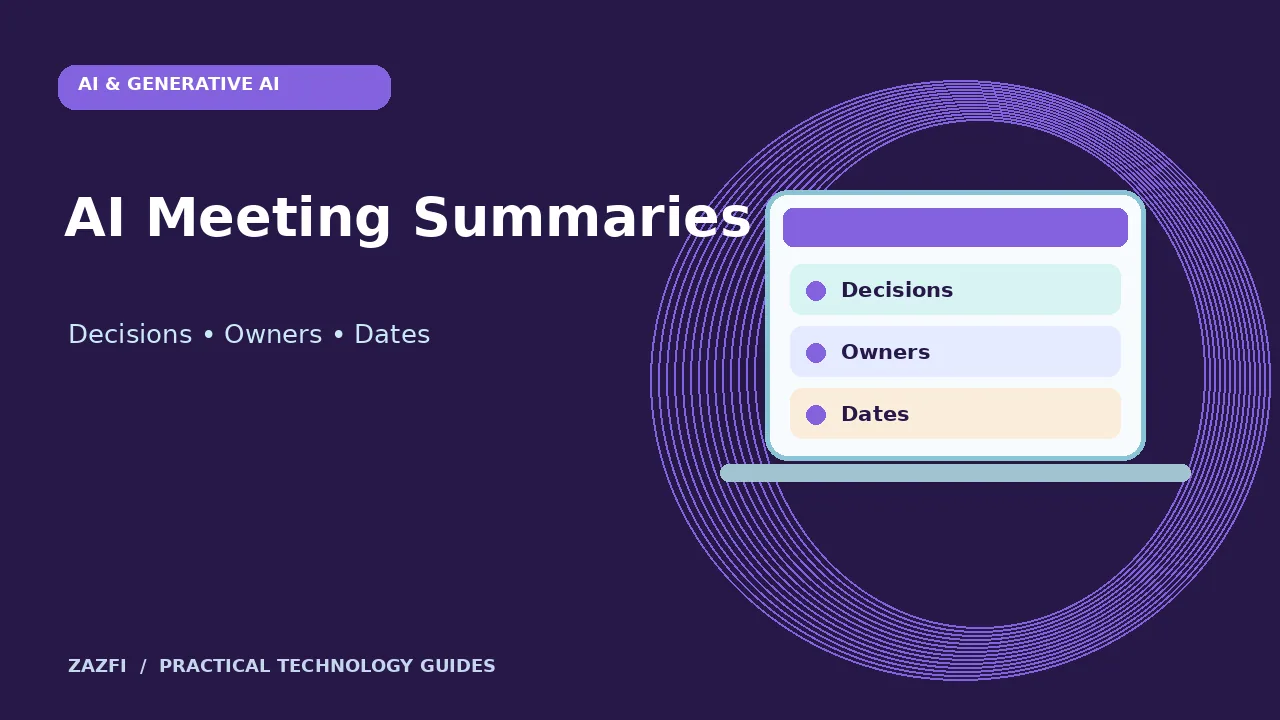
A summary of every sentence may be less useful than a short note of choices, blockers, and next steps. Ask the assistant for a concise draft with source timestamps. Then check the few lines on which people will act.
For a twenty-minute project call, try three headings: decisions, open questions, and actions. Remove background detail that nobody needs to do the next task.
Try this in practice
Write down the exact outcome you expect before you start. Keep the original material beside your notes, and compare what you see with the claim being made. Do not let a neat-looking result replace the evidence.
Use the transcript as evidence, not as truth
Automatic transcription can confuse names, accents, and technical terms. A summary based on a flawed transcript may sound confident while repeating those mistakes. Read unusual phrases against the audio.
If the speaker says ‘phase two’ but the transcript says ‘face too,’ fix the phrase before writing a project plan. For a multilingual meeting, check any translated terms with a fluent attendee.
Try this in practice
Choose a low-risk example before using the method on an important task. Ask another person to review an uncertain result when money, safety, or private data is involved. A second look can catch details missed in a rush.
Handle disagreement fairly
People may leave a meeting with different views. A good recap should record where no choice was made. It should not create a false consensus to make the note seem neat.
When two teams disagree about a release, write both options and identify who will decide. That is more useful than a vague line saying everyone is aligned.
Try this in practice
When a result is unclear, record the question instead of inventing an answer. Return to the official source or the person responsible for the task. Keep the final record short enough that another reader can follow your decision.
Protect customer details
Before sharing a note, scan it for account numbers, personal addresses, health details, and other facts that the audience does not need. A summary can spread private data to more readers than the original call.
Share a short action note with the whole team and keep sensitive parts in the approved record. Do not paste private call excerpts into open chat groups.
Try this in practice
Write down the exact outcome you expect before you start. Keep the original material beside your notes, and compare what you see with the claim being made. Do not let a neat-looking result replace the evidence.
Ask for direct evidence
A timestamp or short source excerpt helps people verify a disputed point. Ask the AI system to show where it found each critical decision. Then inspect the recording or transcript yourself.
For a procurement call, link each cost claim to a quote from the supplier. If the transcript has no support, remove the claim until someone confirms it.
Try this in practice
Choose a low-risk example before using the method on an important task. Ask another person to review an uncertain result when money, safety, or private data is involved. A second look can catch details missed in a rush.
Set a human review rule
One person should own the final note. They can verify decisions, names, deadlines, and private content before sending it. This is a light quality check, not a full audit of every word.
For high-stakes meetings about contracts or safety, require a second reviewer. The goal is to keep a drafting tool from becoming the final authority.
Try this in practice
When a result is unclear, record the question instead of inventing an answer. Return to the official source or the person responsible for the task. Keep the final record short enough that another reader can follow your decision.
Use a practical scoring sheet
Pick ten claims from the draft: three decisions, three tasks, two dates, and two figures. Mark each as supported, unclear, or wrong. This test gives a better view of quality than whether the summary reads well.
If several items are wrong, change the prompt, fix the transcript, or stop using that setup for critical meetings. Do not hide error rates behind attractive formatting.
Try this in practice
Write down the exact outcome you expect before you start. Keep the original material beside your notes, and compare what you see with the claim being made. Do not let a neat-looking result replace the evidence.
What to do when facts cannot be verified
Some meetings have poor audio or missing parts. In those cases, mark uncertain facts openly. Ask the speaker for clarification instead of editing the text until it sounds right.
A useful line is ‘owner to confirm by email.’ It saves time and keeps a weak transcription from creating a false commitment.
Try this in practice
Choose a low-risk example before using the method on an important task. Ask another person to review an uncertain result when money, safety, or private data is involved. A second look can catch details missed in a rush.
Build a repeatable team habit
Keep a plain template and a short approval step. Store the approved version where the team already works. Correct mistakes in that version rather than letting several conflicting copies circulate.
Over time, check whether people finish tasks faster and whether corrections are rare. Those outcomes matter more than the number of words the tool writes.
Try this in practice
When a result is unclear, record the question instead of inventing an answer. Return to the official source or the person responsible for the task. Keep the final record short enough that another reader can follow your decision.
Useful checks before you finish
- Confirm the source and date of any key claim.
- Test the method on a low-risk example first.
- Keep private information out of shared notes.
- Ask for help when the result affects money or safety.
For wider guidance, read the NIST AI risk framework. The resource provides useful context, but it does not replace a check of your own device, service, or situation.
Final takeaway
Make the decision on what you can verify. Take a moment to compare real results with the stated claim. If something does not fit, stop and find the cause before you commit.