 by
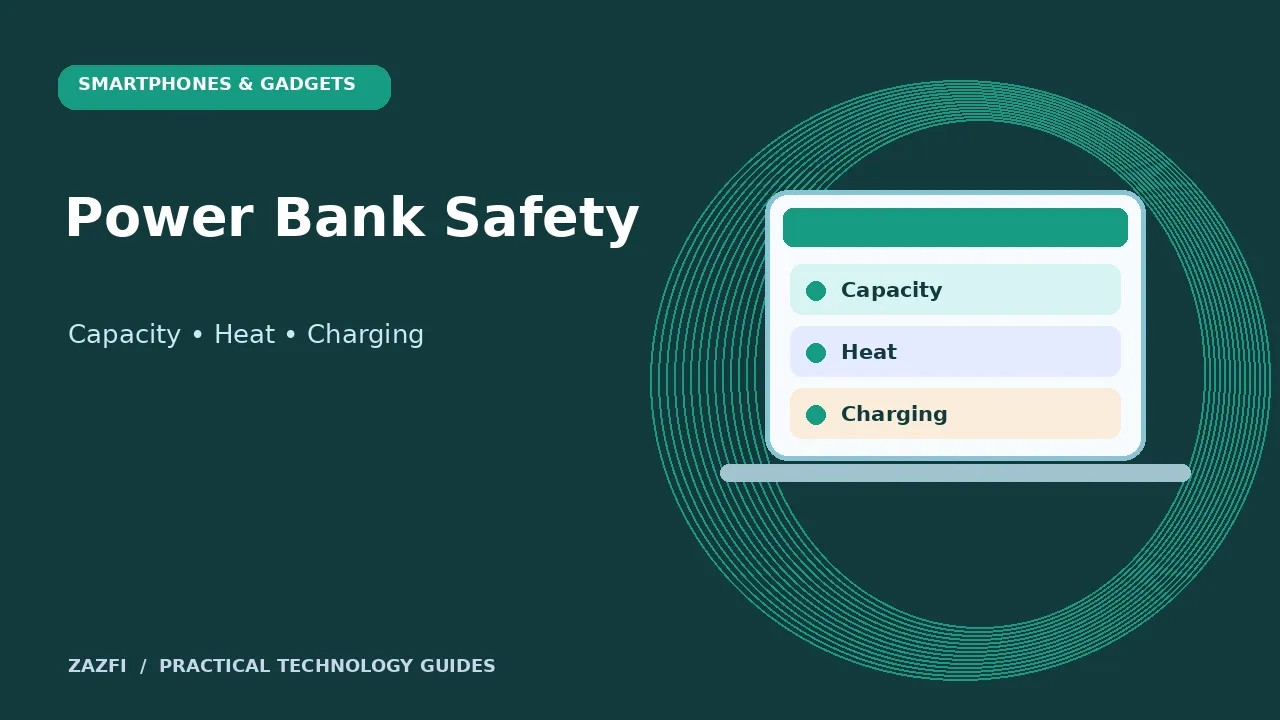
How to Test a Power Bank Safely Before a Long Trip
This guide explains power bank safety test with practical steps for people in different countries. Start with the real problem and the data or device in front of you. The goal is to make a safe, informed choice rather than follow a vague promise.
Read the label first
Check capacity, watt-hours, input and output ratings, and maker details. The printed capacity may be in milliamp-hours, while travel rules often use watt-hours.
If the label is missing or unreadable, do not assume the product meets airline rules. Find the maker’s official specification for the exact model.
What this looks like in daily life
Imagine you need to handle this during an ordinary workday, with little time and several tasks open. Check the part that matters, record your result, and pause if the evidence is unclear. A small check now is easier than fixing a mistake after sharing or paying.
Inspect the body
Look for swelling, cracks, loose ports, or a damaged cable. Stop using any unit that smells strange, leaks, or becomes very hot.
A swollen lithium-ion battery should not be pressed flat or put into regular trash. Follow local battery-disposal guidance.
What this looks like in daily life
Try the step first with a low-risk item you already understand. Compare the outcome with the service’s documented behavior. If the result differs, look for a setting or version difference instead of guessing at a fix.
Check airline policies
Airlines often restrict spare lithium batteries to cabin baggage and set capacity limits, but policies vary by operator and destination.
Confirm the current rule with each airline before you fly. Do not rely on a social media screenshot or an old packing checklist.
What this looks like in daily life
Before moving on, ask whether another person could follow the same steps from your notes. Include the source, date, and any warning you saw. This makes it easier to review your choice if the product or rules change.
Use the right charging cable

A frayed cable can heat up or fail to deliver the expected power. Test with a sound cable that supports the device’s charging standard.
If a laptop does not charge, the bank may lack the required power output. That is a compatibility issue, not always a fault.
What this looks like in daily life
Imagine you need to handle this during an ordinary workday, with little time and several tasks open. Check the part that matters, record your result, and pause if the evidence is unclear. A small check now is easier than fixing a mistake after sharing or paying.
Charge once while supervised
Place the power bank on a hard, dry surface away from bedding. Use the specified input method and watch for unusual heat or smell.
Do not cover it with clothing or leave it charging on a soft bed. Stop the test if the device behaves abnormally.
What this looks like in daily life
Try the step first with a low-risk item you already understand. Compare the outcome with the service’s documented behavior. If the result differs, look for a setting or version difference instead of guessing at a fix.
Run a phone charge test
Use a phone at a known battery level, connect the bank, and note whether the connection remains steady. Some banks switch off with very low-power devices.
A full bank may not fully charge a phone the number of times implied by raw capacity. Conversion losses are normal.
What this looks like in daily life
Before moving on, ask whether another person could follow the same steps from your notes. Include the source, date, and any warning you saw. This makes it easier to review your choice if the product or rules change.
Measure real-world usefulness
Try charging the devices you intend to carry. A small bank may be enough for emergency messages but not for repeated video calls and navigation.
Test with the screen and apps you will use. A product that maintains charge during heavy use may be more useful than one that charges fast only when idle.
What this looks like in daily life
Imagine you need to handle this during an ordinary workday, with little time and several tasks open. Check the part that matters, record your result, and pause if the evidence is unclear. A small check now is easier than fixing a mistake after sharing or paying.
Check multiple ports
If you plan to charge two devices at once, test them together. Some banks reduce output per port when several items are connected.
Read the total output rating, not just the maximum printed next to one port.
What this looks like in daily life
Try the step first with a low-risk item you already understand. Compare the outcome with the service’s documented behavior. If the result differs, look for a setting or version difference instead of guessing at a fix.
Avoid extreme heat
Do not leave a battery in a parked car or in direct summer sun. Heat harms battery life and can increase risk.
In hot climates, keep it shaded and dry, and allow a warm device to cool before charging again.
What this looks like in daily life
Before moving on, ask whether another person could follow the same steps from your notes. Include the source, date, and any warning you saw. This makes it easier to review your choice if the product or rules change.
Pack to prevent damage
Protect ports from small metal items and use a pouch that keeps the device from being crushed. Carry the bank where you can inspect it.
Do not pack a damaged unit because it worked yesterday. Replacement is safer than taking an avoidable risk.
What this looks like in daily life
Imagine you need to handle this during an ordinary workday, with little time and several tasks open. Check the part that matters, record your result, and pause if the evidence is unclear. A small check now is easier than fixing a mistake after sharing or paying.
Keep a backup plan
Save tickets and key addresses offline, carry a working cable, and know where you can use a standard outlet.
A power bank is useful, but it is not a substitute for keeping your phone charged before leaving home.
What this looks like in daily life
Try the step first with a low-risk item you already understand. Compare the outcome with the service’s documented behavior. If the result differs, look for a setting or version difference instead of guessing at a fix.
Follow official safety advice
Check your product’s recall status and the maker’s care guidance, especially for an older bank.
The IATA lithium battery guidance is a useful starting point for air travel; your airline’s current rules still apply.
What this looks like in daily life
Before moving on, ask whether another person could follow the same steps from your notes. Include the source, date, and any warning you saw. This makes it easier to review your choice if the product or rules change.
Key points to remember
- Start with the current official source.
- Check dates, limits, and product differences.
- Keep personal data private.
- Use a small test where possible.
- Write down anything that still needs confirmation.
Conclusion
No one setting or short checklist will fit every device or country. Use these steps as a starting point, then verify the details that matter to your situation. A clear record of what you checked is more useful than an unsupported claim of certainty.